


Table of Contents
- How reed diffusers actually work
- Why not all reeds are the same
- Fibre reeds vs rattan reeds
- Does reed size affect scent throw?
- How many reeds should you use?
- How reeds interact with diffuser bases
- Why flipping reeds matters
- Clear vs black reeds
- Common mistakes that weaken scent throw
- How to test reeds before selling
- Final thoughts
- Disclaimer
- FAQs
Best Reeds for Reed Diffusers: Stronger Scent Throw
If your reed diffuser looks beautiful but barely smells of anything, chances are the problem isn’t your fragrance oil — it’s your reeds. Choosing the Best Reeds for Reed Diffusers can make the difference between a subtle background scent and a room-filling aroma that makes your home feel instantly cosy. In this guide, we will explore how reeds work, why they matter, and how to choose the right type for stronger, more consistent scent throw.
Whether you are making diffusers for yourself or selling them as part of a home fragrance brand, understanding reeds is one of the easiest ways to upgrade your results.
How reed diffusers actually work
Reed diffusers rely on capillary action. This is the same natural process that allows a paper towel to soak up water or a plant to draw moisture from its roots. When you place reeds into a diffuser bottle, the liquid is drawn up through tiny channels inside the reed. Once it reaches the top, it slowly evaporates into the air, carrying fragrance molecules with it.
The better the reed, the more efficiently this happens. That is why the Best Reeds for Reed Diffusers are just as important as the base liquid or fragrance oil. Poor-quality reeds can become blocked, release scent unevenly, or simply fail to perform at all.
Why not all reeds are the same
It is tempting to think that any stick placed in a bottle will work. In reality, reeds vary hugely in quality, material, and performance. Some are designed purely for decoration, while others are engineered specifically for fragrance diffusion.
Reeds that are too dense will struggle to absorb liquid. Reeds that are too porous can flood, releasing fragrance too quickly and shortening the life of your diffuser. Finding the Best Reeds for Reed Diffusers means choosing a reed that strikes the perfect balance between absorption and evaporation.
Fibre reeds vs rattan reeds
The two most common reed types are rattan and fibre.
Rattan reeds
Rattan is a natural material made from palm stems. Inside each stem are small channels that allow liquid to travel upwards. Rattan has been used for years in reed diffusers and is still popular today.
Pros:
Natural and eco-friendly
Good absorption
Works well with most diffuser bases
Cons:
Can become blocked over time
Performance can vary between batches
Fibre reeds
Fibre reeds are made from synthetic materials designed specifically for fragrance diffusion. They have consistent, engineered channels that pull liquid evenly from bottom to top.
Pros:
Very strong and consistent scent throw
Less likely to clog
Longer-lasting performance
Cons:
Not biodegradable
Slightly more expensive
For many makers, fibre reeds are considered the Best Reeds for Reed Diffusers because they deliver a stronger and more reliable scent release, especially when paired with modern diffuser bases.
Does reed size affect scent throw?
Absolutely. The diameter and length of a reed directly affect how much fragrance is released into the air.
Thicker reeds draw up more liquid, creating a stronger scent
Thinner reeds release fragrance more slowly and subtly
Longer reeds have more surface area for evaporation
Shorter reeds tend to produce a softer aroma
If you want a powerful diffuser for a large room, using thicker, longer reeds is one of the easiest ways to increase performance. This is why many of the Best Reeds for Reed Diffusers are around 4–5mm in diameter and cut slightly taller than the bottle.
How many reeds should you use?
More reeds equals more scent — but only up to a point.
Using too many reeds can cause the diffuser to evaporate too quickly, wasting fragrance and shortening its lifespan. Using too few may result in weak scent throw.
A good starting point is:
Small room: 4–6 reeds
Medium room: 6–8 reeds
Large room: 8–10 reeds
This can be adjusted depending on how strong you want the fragrance to be and the type of reed you are using. The Best Reeds for Reed Diffusers are efficient enough that you often need fewer than you think.
How reeds interact with diffuser bases
Not all diffuser liquids behave the same way. Thin, fast-evaporating bases move differently through reeds compared to thicker, slow-release bases.
High-performance bases such as Augeo Clean Multi or DPG-based blends wick beautifully through fibre reeds, giving excellent scent throw. Heavier mineral-based fluids may struggle, even with the Best Reeds for Reed Diffusers, because the liquid itself moves too slowly.
Matching your reeds to your base is just as important as matching them to your fragrance.
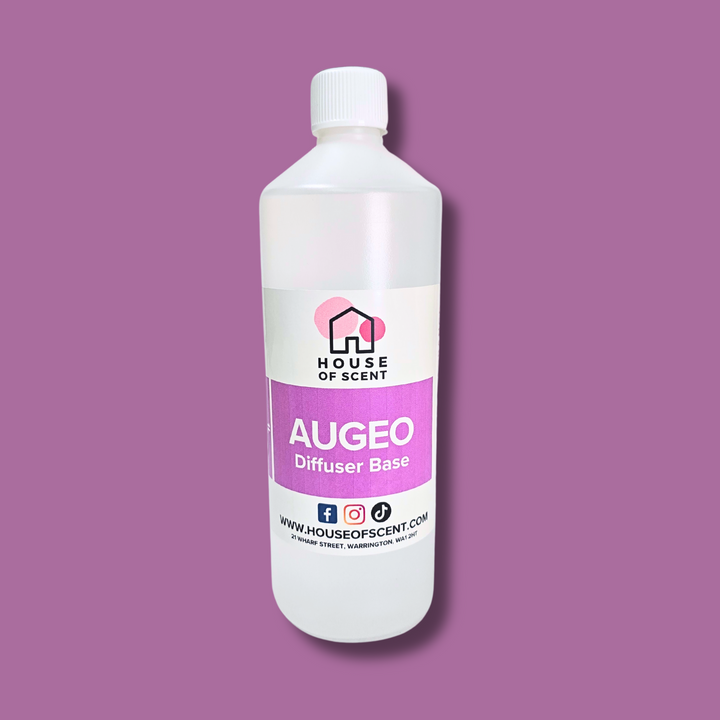
Augeo Clean Multi Base
£3.99
Discover the powerful, eco-friendly alternative to traditional solvents - Augeo Clean Multi Base. With superior performance and high solvency power, it is the ideal fragrance carrier for both reed diffusers, plug in diffusers and room sprays. Made from sustainable ingredients,… read more