

Table of Contents
From Wax Melts to Full Range: CLP Guide for Makers
So you started with wax melts and want to expand your range - perfect timing! You've found the CLP guide for makers :)
Simple enough, right? Melt wax, add fragrance, pour, label…done.
Then one day you thought, “I could totally expand this.”
And suddenly, your ideas take off - car diffusers, room sprays, reed diffusers, carpet fresheners, sizzlers…basically a full home fragrance empire in your head.
Then reality hits.
CLP is no longer “simple.”
Welcome to the stage every maker reaches sooner or later 😄
This guide is here to cut through the confusion and turn it into something clear, practical, and genuinely easy to follow.
🧠 Wax melts: your starting point
Wax melts are usually where most makers begin because they feel straightforward and low-risk - and it’s why they’re often the starting point in any good CLP guide for makers.
You’ve got:
a wax base
a fragrance oil
a simple mix
a basic CLP label
That’s it.
There are fewer variables, fewer unknowns, and fewer things that can go wrong from a compliance perspective.
This is your foundation stage. Everything else builds from here.
But once you expand your range, things start to change - not because CLP suddenly becomes complicated, but because your products become more varied. Different product types behave differently, and that’s what affects your labelling requirements.
🚀 The moment everything changes
The shift usually happens quietly.
You start thinking beyond wax melts and realise there’s a whole world of home fragrance products you could offer. And from a business point of view, it makes sense - more products, more choice, more opportunities to grow.
But with that growth comes one key change:
You’re no longer working with just one type of formulation.
You’re now working with:
- different bases
- different fragrance percentages
- different exposure types
- and different risk levels
And that’s exactly why CLP starts to feel overwhelming
🧪 House of Scent CLP Support (Simple Breakdown)
To keep things easy for makers, here’s how our CLP support works:
We provide:
- 10% CLP
- 25% CLP
These are based on:
- fragrance oils used within tested percentages
- and non-hazardous bases
If you stay within these parameters, you can use the provided CLP safely and confidently.
But once you change the base or exceed fragrance percentages, the CLP would need to be recalculated.
This isn’t to make things difficult - it’s simply because the classification of your product has changed.
📊 CLP by Product Type (Simple Guide)
Here’s a clear breakdown of how CLP works depending on the product and base used:
| Product Type | Base Type | CLP Provided | Simple Explanation |
|---|---|---|---|
| Wax Melts | 🟢 Non-hazardous wax base | 10% CLP | Standard CLP applies |
| Candles | 🟢 Non-hazardous wax base | 10% CLP | Same as wax melts |
| Room Sprays | 🟢 Non-hazardous liquid base e.g. DPG | 10% or 25% CLP | Depends on fragrance strength |
| Carpet Freshener | 🟢 Non-hazardous base e.g. Sodium Bicarbonate | 10% CLP | Inhalation exposure considered |
| Car Diffusers | 🟢 Non-hazardous base | 25% CLP | Higher exposure in an enclosed space |
| Reed Diffusers | Hazardous base⚠️ e.g. Augeo Clean Multi | ❗ Recalculation required | Standard CLP cannot be used |
The simplest way to understand CLP
This is where most makers get confused - but it really doesn’t need to be complicated.
🟢 If you are using a non-hazardous base, you can use House of Scent’s standard 10% or 25% CLP
🔴 If you are using a hazardous base, or you change your formulation, the CLP must be recalculated
This applies mainly to liquid products, where the base plays a big role in classification.
So in short:
✔ Non-hazardous base = use provided CLP
❗ Hazardous base or formula change = CLP must be recalculated
That’s the only rule you really need.
🧪 House of Scent Bases Explained (Simple Version)
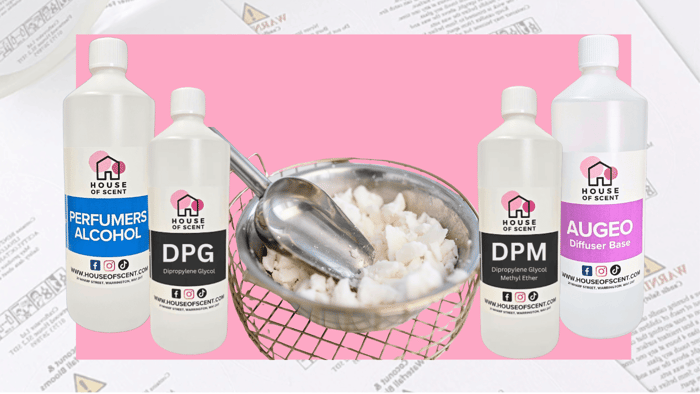
Here are the bases we supply and what they mean for CLP:
| Base | Hazard Status | What this means |
|---|---|---|
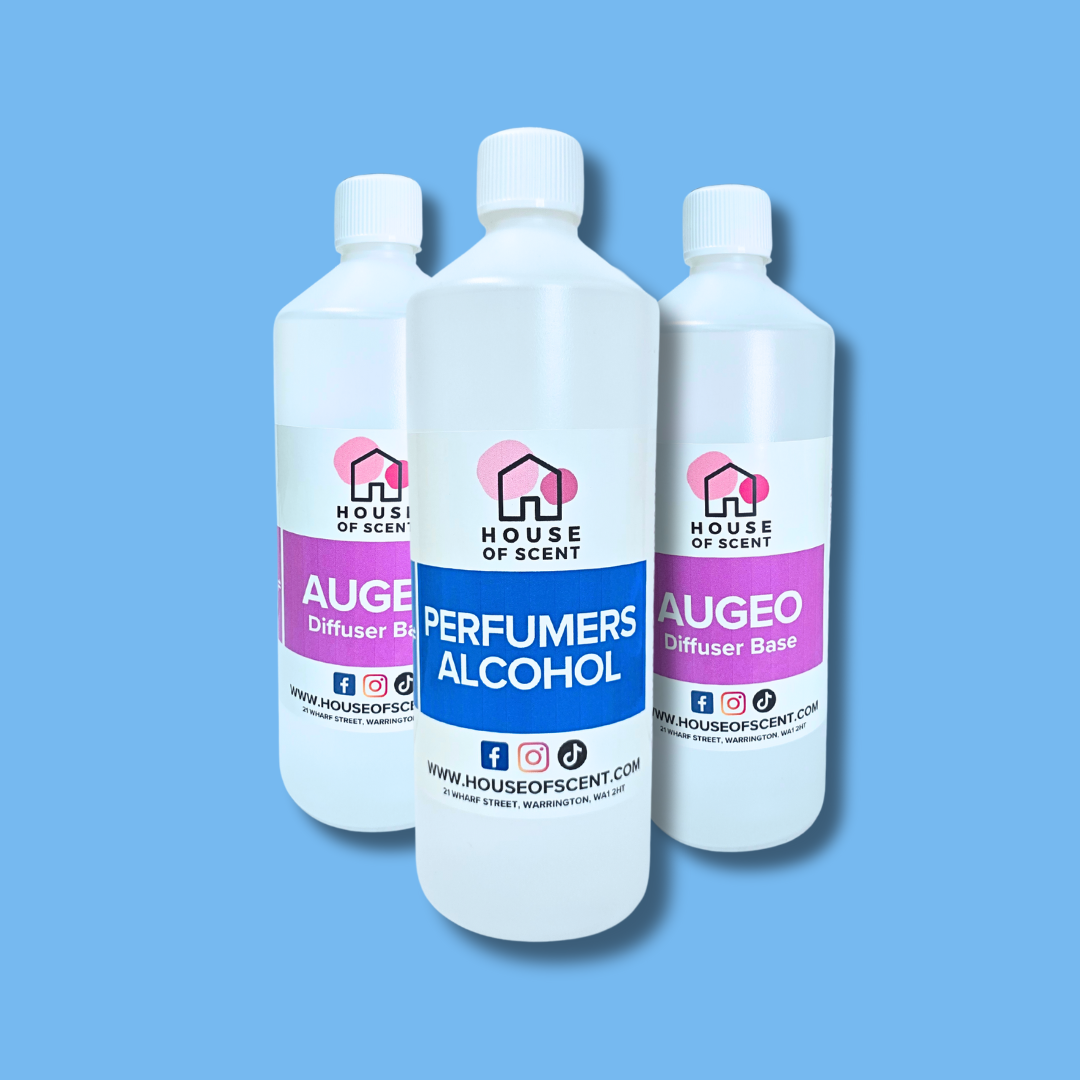
| Perfumers Alcohol | ⚠️ Hazardous | CLP must be calculated from full formulation |
| Augeo Clean Multi Base | ⚠️ Hazardous | CLP must be recalculated (used in diffusers) |
| DPG (Dipropylene Glycol) | 🟢 Non-hazardous | Can use standard CLP if within limits |
| DPM (Dipropylene Glycol Monomethyl Ether) | 🟢 Non-hazardous | Can use standard CLP if within limits |
Why liquid products feel more complicated
Wax melts feel simple because everything is stable and predictable. You’re working with a solid product, a consistent base (wax), and a fairly standard usage pattern - which is exactly why they’re often the starting point in any CLP guide for makers.
Liquid products, on the other hand, introduce more variables.
They feel more complicated because:
- different bases behave differently
- fragrance strength changes classification
- exposure levels vary (skin, air, enclosed spaces)
- some bases are hazardous
- evaporation and inhalation become factors
So CLP changes depending on what you’re using - not just what you’re making.
This is why two products that smell exactly the same can require completely different labels.
🧩 A common mistake makers make
One of the most common misunderstandings is assuming that CLP is tied only to the fragrance oil.
It’s not.
You could use the exact same fragrance across multiple products - but:
- in wax melts → standard CLP works
- in a room spray → depends on base and %
- in a reed diffuser → may require full recalculation
Same scent. Different outcome.
That’s why copying CLP from one product to another without checking the formulation can lead to incorrect labelling.
🧭 Final thoughts (keep it simple!)
If you take just a few things from this CLP guide for makers, let it be these:
🕯️ Wax melts = simple CLP foundation
💧 Liquids = depends on the type of base
⚠️ Hazardous base = recalculation required
That’s it.
You don’t need to memorise everything. You just need to understand what your product is made of and how it behaves.
Once that clicks, everything becomes much easier.
And instead of feeling overwhelmed by CLP, you’ll start seeing it as something logical - and manageable.
And that’s exactly where confidence starts. 🙂
If you need help with CLP labelling, please reach out - we’re always happy to help.
Email: [email protected]
Disclaimer
FAQs
Can I use the same CLP for all my home fragrance products?
No. CLP depends on the formulation, base, and fragrance percentage. Different products may require different classifications.
When can I use the 10% or 25% CLP provided by my supplier?
You can use standard CLP if you are using a non-hazardous base and staying within the tested fragrance percentage limits - 10% and 25% CLP