

Table of Contents
- Probe vs Infrared Thermometers: Which Is Most Reliable?
- How Thermometers Measure Temperature
- Pros and Cons of Probe Thermometers
- Pros and Cons of Infrared Thermometers
- When to Use Each Type
- Accuracy Factors to Consider
- Common Mistakes with Thermometers
- Combining Both Tools for Reliable Results
- Calibration Tips
- Which Thermometer is Most Reliable?
- Final Thoughts
- FAQs
Probe vs Infrared Thermometers: Which Is Most Reliable?
Accurate temperature measurement is crucial in home fragrance making, particularly for candles, wax melts, and other wax-based products. Using the wrong temperature can affect fragrance load, scent throw, colour retention, and even safety. This brings us to a common question among makers: Probe vs Infrared Thermometers — which is actually reliable?
While both types of thermometers are widely used, their performance, applications, and limitations vary significantly. Choosing the right tool can make a noticeable difference in product quality and consistency. In this blog, we’ll dive into how probe and infrared thermometers work, their pros and cons, and how to ensure accurate readings in your home fragrance making process.
How Thermometers Measure Temperature
Before comparing Probe vs Infrared Thermometers, it’s important to understand the basic principles of temperature measurement.
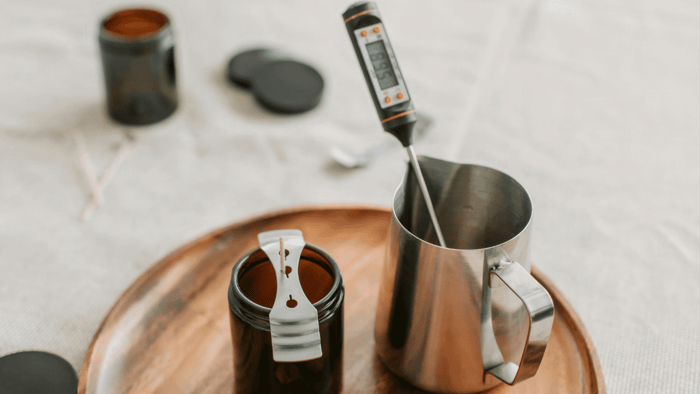
Probe Thermometers measure temperature by direct contact. A metal probe is inserted into the substance, and an internal sensor reads the heat. This method gives a direct measurement of the wax or liquid, ensuring accuracy at the point of contact.
Infrared Thermometers, on the other hand, measure the thermal radiation emitted by a surface. They read temperature without touching the material, providing a quick and convenient measurement. Infrared thermometers are ideal for surface readings, but they can be affected by reflective surfaces, emissivity differences, and environmental factors.
Pros and Cons of Probe Thermometers
Pros:
- Direct and Accurate: Since the probe is immersed in the wax, it measures the actual temperature of the material.
- Reliable for Small Batches: Especially when working with small amounts of wax, probe thermometers give consistent results.
- Versatile: Can be used in a variety of liquids and waxes, including scented and coloured blends.
Cons:
- Slower to Read: Probe thermometers take time to stabilise, which can slow down a fast-paced workflow.
- Potential Contamination: If not cleaned thoroughly between batches, probes can introduce fragrance or colour contamination.
- Requires Submersion: You need to insert the probe directly, which can be tricky in shallow or small containers.
Pros and Cons of Infrared Thermometers
Pros:
- Non-Contact: Infrared thermometers measure temperature without touching the wax, reducing the risk of contamination.
- Fast Readings: They give near-instantaneous results, useful for checking multiple containers quickly.
- Convenient: Useful when working with large or irregularly shaped containers that a probe can’t reach easily.
Cons:
- Surface Only: Infrared thermometers only measure the surface temperature, which may not reflect the internal temperature of the wax.
- Affected by Reflective Surfaces: Shiny containers, metallic wicks, or coloured dyes can distort readings.
- Calibration Sensitivity: They often require regular calibration to maintain accuracy.
When to Use Each Type
Understanding the ideal use cases for each thermometer in the probe vs infrared thermometers debate helps maximise reliability:
Probe Thermometers:
- Best for measuring bulk wax in a pouring pot or melting container.
- Essential when adding fragrance oils at a specific temperature.
- Ideal for precise temperature control, such as for soy wax, which has narrow working ranges.
Infrared Thermometers:
- Useful for quick checks of surface temperature or top layer heat.
- Good for shallow containers where inserting a probe isn’t practical.
- Handy for monitoring multiple containers during curing or cooling.
For home fragrance makers, many find a combination of both types gives the most reliable results. Quick surface checks with infrared thermometers can be supplemented with probe readings to ensure internal temperatures are correct.
Accuracy Factors to Consider
When comparing Probe vs Infrared Thermometers, accuracy isn’t only about the type — it’s about how you use the tool. Several factors affect temperature measurement:
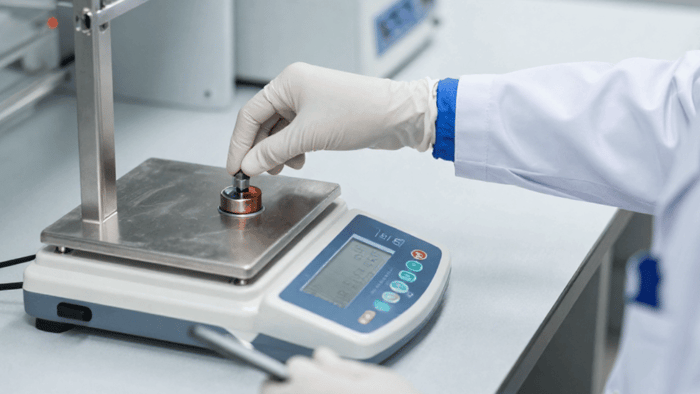
- Calibration: Regular calibration is crucial. Probe thermometers should be checked against ice water (0°C) and boiling water (100°C), while infrared thermometers often require a blackbody or manufacturer calibration routine.
- Emissivity Settings (Infrared Only): Infrared thermometers measure heat based on emitted radiation. Adjusting the emissivity to match the material improves accuracy, especially for wax and metallic containers.
- Depth of Measurement (Probe): Ensure the probe is fully immersed in the wax, ideally avoiding contact with the container walls or bottom, to avoid skewed readings.
- Environmental Factors: Draughts, direct sunlight, or reflective surfaces can affect infrared readings, while probe thermometers are generally more stable in these conditions.
Common Mistakes with Thermometers
Even experienced makers sometimes make errors that affect temperature readings:
- Relying solely on infrared thermometers for deep wax: Surface temperature may be cooler or hotter than the interior.
- Not waiting for probe stabilization: Removing a probe too soon can give inaccurate results.
- Using shiny or reflective containers with infrared thermometers: This can reflect surrounding heat and distort the reading.
- Skipping calibration: Both thermometer types require regular checking to remain reliable.
By understanding these pitfalls, you can avoid inconsistencies in scent throw, wax adhesion, or pouring errors.
Combining Both Tools for Reliable Results
For makers serious about consistency, combining both thermometers often produces the best results. Here’s a recommended workflow:
- Use a probe thermometer for the bulk wax in your melting pot to measure the actual temperature.
- Check the surface temperature of individual containers with an infrared thermometer for quick reference.
- Always cross-check readings before adding fragrance oils or pouring, especially if the recipe requires a precise range.
This hybrid approach ensures that temperature control is accurate and repeatable, reducing the likelihood of failed batches.
Calibration Tips
Whether using a probe or infrared thermometer, calibration is essential for accuracy:
Probe Thermometers:
- Immerse in ice water (0°C) and boiling water (100°C) to check readings.
- Adjust according to the manufacturer’s instructions.
Infrared Thermometers:
- Follow the manufacturer’s procedure using calibration tools or blackbody sources.
- Adjust emissivity settings to match the wax or container type.
- Perform regular checks before production sessions.
Maintaining calibration ensures that your temperature readings are consistent, which directly impacts the quality and safety of your products.
Which Thermometer is Most Reliable?
The answer depends on your priorities:
- Probe thermometers are generally more accurate for internal temperatures and critical formulations.
- Infrared thermometers are faster, convenient, and great for surface monitoring, but less reliable for bulk wax accuracy.
For most home fragrance makers, using a probe thermometer as the primary tool and supplementing with an infrared thermometer is the ideal solution. It balances speed with precision and ensures your wax is always at the optimal temperature for fragrance and pour.
Final Thoughts
Choosing the right thermometer is more than a matter of convenience — it’s about reliability and product consistency. By understanding the strengths and limitations of Probe vs Infrared Thermometers, home fragrance makers can make informed decisions, avoid common pitfalls, and produce higher-quality products.
Regular calibration, proper usage, and awareness of environmental factors are key. Whether you’re measuring bulk wax, adding fragrance oils, or checking surface temperature before pouring, having the right tools will help you achieve consistent, professional results every time.
In the world of candle and wax-based products, precision matters. Selecting the right thermometer and using it correctly ensures your batches not only smell amazing but also burn safely and perform consistently — giving you and your customers the best possible experience. Explore IFRA-Certified Fragrance Oils
Disclaimer
This blog, Probe vs Infrared Thermometers: Which Is Most Reliable?, is for informational purposes only. Results may vary depending on materials, equipment, and process. Readers should test and use thermometers at their own discretion. Compliance with all safety standards is the responsibility of the maker.
FAQs
Which is more reliable for home fragrance making: probe or infrared thermometers?
Probe thermometers are generally more reliable for measuring the internal temperature of wax, while infrared thermometers are faster for surface readings but less accurate for bulk wax.
How should I use probe and infrared thermometers together?
Use a probe thermometer for precise internal measurements and an infrared thermometer for quick surface checks. Combining both ensures accurate and consistent results.