

Table of Contents
- What Is a Glycol Ether?
- DPM (Dipropylene Glycol Methyl Ether): The Basics
- Why it Matters in Fragrance Formulation
-
- How DPM (Glycol Ether) Is Used in Home Fragrance
- Glycol Ether vs Other Solvents
- Is Glycol Ether (DPM) Safe or Hazardous?
- Tips for Using DPM (Glycol Ether) in Your Products
- Final Thoughts
- FAQs
When you’re curious about fragrance formulation — whether for room sprays, reed diffusers, or other home scent products — you’ll often encounter the term glycol ether. One specific type of glycol ether that comes up again and again is DPM, short for Dipropylene Glycol Methyl Ether. In this blog, we’ll explore what DPM is, why it matters, and exactly how it’s used in the world of home fragrance.
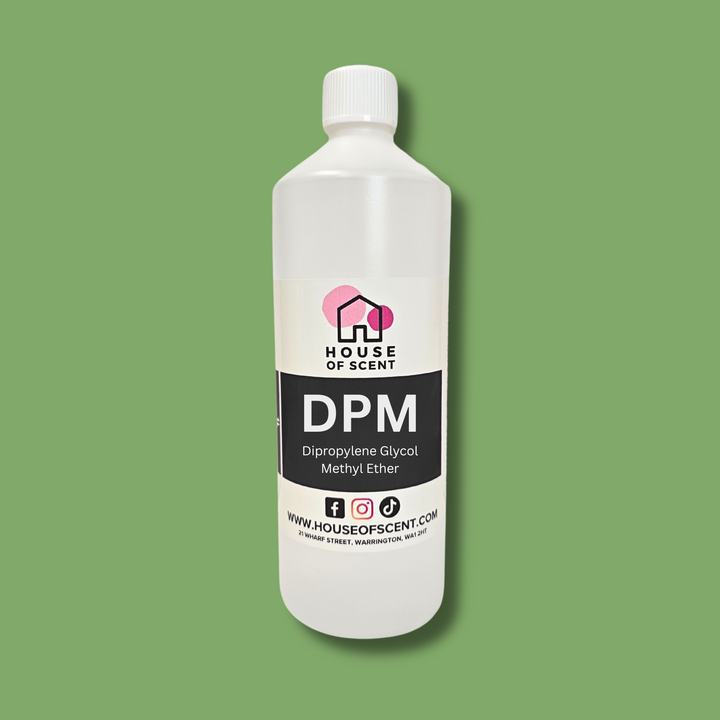
DPM | Dipropylene Glycol Methyl Ether
£9.99
Our premium-grade Dipropylene Glycol Methyl Ether (DPM) - also known as Dowanol DPM - is a powerful, low-odour solvent known for its excellent solvency, slow evaporation rate, and compatibility with fragrance oils. Its high performance and low toxicity make it… read more
What Is a Glycol Ether?
At a basic level, it is a class of organic solvent that combines characteristics of both alcohols and ethers. These chemicals are prized for their ability to dissolve a wide range of substances, mix well with water, and evaporate at controlled rates. This makes them versatile in both industrial and consumer formulas.
DPM — Dipropylene Glycol Methyl Ether — is one of the most common glycol ethers used in fragrance and air‑care products. It’s a clear, colourless liquid with a mild scent and excellent solvency, meaning it helps fragrance oils dissolve evenly and stay stable in a solution.
DPM (Dipropylene Glycol Methyl Ether): The Basics
So what exactly is DPM? Chemically, DPM belongs to the propylene glycol ether family and is often sold under names like Dowanol DPM. It’s a mid‑to‑slow evaporating solvent with 100% water solubility and a relatively high flash point, which makes it easier and safer to handle than some other solvents.
Because of these properties, DPM doesn’t evaporate as quickly as something like denatured alcohol. That slower evaporation means it can help fragrance molecules stay suspended and release scent more gradually. For home fragrance products, this translates into longer‑lasting scent delivery and smoother diffusion.
Why it Matters in Fragrance Formulation
In fragrance products, the role of DPM is often described as a carrier or solvent for aroma compounds. In other words, it’s not the scent itself, but the vehicle that helps the scent spread evenly and predictably.
Here’s what it does in practical terms:
Improves Dissolution: Many concentrated fragrance oils don’t easily mix with water or alcohol on their own; this helps them blend into the base without cloudiness or separation.
Controls Evaporation: Unlike fast‑evaporating alcohols, DPM’s slower evaporation rate keeps fragrance molecules in the air longer, which can enhance longevity.
Mild Odour: Solvents like DPM typically have a low odour of their own, which means they don’t interfere with your chosen scent profile.
Solubility: This mixes well with both water‑based and solvent‑based systems, giving formulators flexibility in product design.
How DPM (Glycol Ether) Is Used in Home Fragrance
1. Room Sprays and Linen Sprays
One of the most common uses of DPM is in room sprays and linen sprays. These products aim to disperse aromatic molecules into the air or onto fabrics without leaving residue or cloudiness. A properly formulated room spray using DPM helps ensure the fragrance oils remain stable and evenly distributed, with the scent lingering longer than with alcohol alone.
2. Reed Diffusers
Reed diffusers are another classic home fragrance format that benefits from using a glycol ether like DPM. In a diffuser, the fragrance base must travel up tiny reed sticks and evaporate over time. The slow, consistent evaporation profile of DPM helps create a steady release of scent rather than a quick burst that fades too fast.
3. Plug‑In Air Fresheners and Car Diffusers
Beyond sprays and reed diffusers, glycol ether solvents like DPM show up in electric plug-in air fresheners and car diffusers too. Because they mix well with fragrance compounds and evaporate consistently, they help deliver scent effectively from a heated or mechanical diffusion system.
Glycol Ether vs Other Solvents
A common question among home formulators is how DPM stacks up against other solvents like ethanol or simple propylene glycol. The key difference lies in evaporation behavior and solvency.
Ethanol / Alcohol: Evaporates quickly and can make sprays smell stronger initially but fade faster.
Glycol Ether DPM: Evaporates more slowly, helping extend scent life and reducing harsh alcohol notes.
Some formulations blend DPM with smaller amounts of alcohol or other solvents to get a tailored evaporation profile, balancing initial scent impact with longevity.
Is Glycol Ether (DPM) Safe or Hazardous?
When working with DPM in home fragrance, safety is an important consideration. In general, DPM is considered low-hazard compared to many other solvents. It has:
Low flammability – Its flash point is higher than typical alcohols, making it safer to store and handle.
Mild odor and low toxicity – At normal use levels in room sprays, diffusers, and linen sprays, it’s not considered acutely toxic.
Regulatory status – DPM is classified as a glycol ether solvent with some restrictions in industrial applications, but for home fragrance products, it is generally considered safe when used as directed.
However, like any chemical, proper handling is recommended. Avoid ingestion, prolonged skin contact, or high-concentration inhalation. Always check the Safety Data Sheet (SDS) for guidance on storage, handling, and disposal. For home fragrance DIYers, this means wearing gloves if needed, working in a ventilated area, and storing the solvent out of reach of children.
Tips for Using DPM (Glycol Ether) in Your Products
If you’re formulating your own home fragrance products, here are some practical tips when using a glycol ether like DPM:
Use it as the Main Solvent in Non‑Alcohol Bases: For products like room/linen sprays and diffusers, DPM’s mild profile and low odor make it a great base. For a step-by-step guide, see our How to Make a Room Linen Spray with DPM blog.
Test Fragrance Load: Different fragrance oils vary in solubility; always test small batches to find the right percentage where the oil stays clear and stable. Additionally, check the IFRA (International Fragrance Association) guidelines for each fragrance to ensure your formulation is safe and compliant for home fragrance use.
Follow Safety Guidelines: Even though glycol ether DPM isn’t as volatile as alcohol, handle with proper protective gear and follow safety data sheet advice.
Document Your Formulations: Keep notes on percentages, fragrance load, and any modifications. This is especially helpful if you’re making multiple batches or planning to scale up for small business production.
Final Thoughts
Glycol ether, especially DPM (Dipropylene Glycol Methyl Ether), plays a crucial role in modern home fragrance formulation. Its properties — excellent solvency, mild odor, water miscibility, slower evaporation, and low hazard profile — make it ideal for room sprays, reed diffusers, plug-in fresheners, and more. Understanding how DPM works will help both hobbyists and professional formulators create stable, long-lasting, and enjoyable fragrance experiences.
Disclaimer
The information in this blog is provided for educational and informational purposes only, based on our knowledge, research, and experience at the time of writing. While we aim to offer accurate guidance on using DPM (Glycol Ether) in home fragrance formulations, readers should conduct their own research and verify all information independently before making business, formulation, or safety decisions.
It is the reader’s responsibility to ensure product safety, test formulations thoroughly, and comply with all relevant regulations, including IFRA guidelines for fragrance usage, CLP labelling requirements, and any local chemical or safety regulations. House of Scent accepts no liability for any losses, damages, or actions taken based on the content of this blog.
FAQs
Can I use DPM to make room sprays and linen sprays?
Yes, DPM (Glycol Ether) is commonly used in room sprays and linen sprays because it helps fragrance oils dissolve evenly and evaporate more slowly than alcohol alone. This results in a more stable formula and longer-lasting scent.
If you’re looking for a step-by-step method, you may find our guide on How to Make a Room / Linen Spray : Dowanol DPM helpful.
Is DPM suitable for reed diffusers, and how does it compare to other bases?
DPM can be used in certain reed diffuser formulations, particularly when blended with other diffuser bases. However, different bases behave differently in terms of scent throw and evaporation rate. To better understand the differences between common options, see our detailed comparison in A Guide to Diffuser Bases: Augeo, DPG & DPM Explained
Do I need to check safety documents when using DPM with fragrance oils?
Absolutely. While DPM itself is considered low hazard when used correctly, the fragrance oil you add must always be used within safe limits. This includes checking IFRA restrictions and reviewing safety documentation to ensure compliance and safe use in home fragrance products. If you’re unsure where to start, our guide on How to read an IFRA Conformity Certificate breaks this down clearly.