

Table of Contents
- Why Oil and Water Don't Mix in Products: Explained
- The Science Behind Oil and Water
- Everyday Examples of Oil and Water Separation
- How This Affects Product Formulation
- The Role of Emulsifiers
- Common Mistakes Hobbyists Make
- Fun Experiments to See the Principle in Action
- Why Understanding This Matters for Safety and Quality
- Tips for Makers and Consumers
- Conclusion
- Disclaimer
- FAQs
Why Oil and Water Don't Mix in Products: Explained
You’ve probably seen it in action: a drizzle of olive oil into a glass of water floats on top like magic, refusing to combine no matter how much you stir. This isn’t just a quirky science trick you did in school - it’s a principle that has a big impact on the products we use every day, from lotions and soaps to wax melts and skincare. Understanding Why Oil and Water Don't Mix in Products is essential for anyone who wants to create stable, high-quality products, whether you’re a hobbyist, small business owner, or just curious about everyday science.
In this guide, we’ll explore the science behind the separation, why it matters for product formulation, and practical tips for making your creations smooth, effective, and long-lasting. Plus, we’ll throw in a fun nod to deionised water to show that even “pure” water isn’t immune to the oil problem!
The Science Behind Oil and Water
So, why does oil refuse to mix with water? The answer lies in molecular polarity. Water is a polar molecule, meaning it has a slight electrical charge that allows its molecules to stick together through hydrogen bonds. Oil, on the other hand, is non-polar. Its molecules don't have these charges, so they don't “stick” to water molecules at all.
Think of it like this - water molecules are social butterflies that only want to hang out with other water molecules. Oil molecules are loners - they prefer to stick to their own kind. This difference is why, no matter how vigorously you stir, oil forms little globules that float on top of water.
Even if you use deionised water, which is stripped of ions and extremely “pure,” the separation still occurs. Purity doesn’t change polarity - it just removes dissolved minerals and impurities, leaving the same polar water molecules that refuse to mingle with non-polar oil.
Deionised Water
£2.79
Our high-purity Deionised Water is produced using advanced technology*. This ultra-pure water is the perfect base for a wide range of bath, body, cosmetic, and home fragrance creations. Use it to make room sprays, fabric mists, and linen refreshers without… read more

Everyday Examples of Oil and Water Separation
Understanding Why Oil and Water Don't Mix in Products becomes much easier when you see it in action around your home. Here are some examples:
- Salad dressings: Oil and vinegar separate naturally until you whisk in an emulsifier like mustard.
- Skincare lotions: Without proper formulation, oil-based moisturisers and water-based ingredients can separate, leaving a greasy layer on top.
- Wax melts and fragrance oils: Trying to mix water-based scents directly into wax will lead to separation unless stabilised.
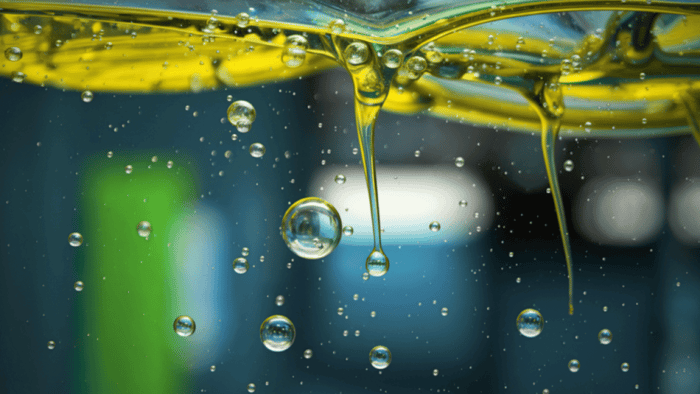
Even simple experiments at home - dropping vegetable oil into a cup of tap or deionised water demonstrate this phenomenon. The oil floats to the surface, forming a distinct layer, stubbornly refusing to mix no matter how much agitation you apply.
How This Affects Product Formulation
If you’re making creams, lotions, or wax melts, understanding Why Oil and Water Don't Mix in Products is crucial. When oil and water separate in a product:
- Consistency suffers: Your product may feel uneven or patchy.
- Efficacy drops: Active ingredients may not be evenly distributed, reducing effectiveness.
- Shelf life shortens: Separation can lead to quicker spoilage or degradation.
For example, a homemade lotion might look fine when freshly mixed, but after a few hours, you might see a layer of oil sitting on top. This is exactly what happens when oil and water are left to do their own thing without a stabiliser.
The Role of Emulsifiers
This is where emulsifiers come to the rescue. Emulsifiers are ingredients that bridge the gap between oil and water, allowing them to mix temporarily or even permanently. They have both a polar (water-loving) end and a non-polar (oil-loving) end.
In your products, emulsifiers work like a matchmaker: the water-loving end bonds with water molecules, and the oil-loving end bonds with oil molecules. The result? A smooth, homogenous mixture that doesn’t separate easily.
Some common emulsifiers include:
- Lecithin: Often used in food, skincare, and cosmetics.
- Beeswax: Creates a natural stabilisation in creams and balms.
- Polysorbate 80: Frequently used in wax melts to blend fragrance oils with water-based scents.
Even in deionised water-based formulations, emulsifiers are crucial. Pure water still has the same polarity problem with oil, so an emulsifier is necessary to keep everything blended.
Common Mistakes Hobbyists Make
Many new makers stumble when trying to combine oil and water-based ingredients. Understanding Why Oil and Water Don't Mix in Products can help avoid these pitfalls:
- Adding water-based scents directly to wax: Without an emulsifier, the scent separates.
- Skipping emulsifiers in lotions: The product splits into layers, leaving some areas greasy and others watery.
- Not shaking or mixing thoroughly: Even stable emulsions can separate slightly over time if not properly combined.
Learning these lessons early prevents frustration and wasted materials, and keeps your creations looking professional.
Fun Experiments to See the Principle in Action
If you want a hands-on demonstration of Why Oil and Water Don't Mix in Products, try this simple experiment at home:
- Fill a clear glass halfway with tap or deionised water.
- Add a spoonful of vegetable oil and watch it float to the top.
- Stir vigorously and observe - the oil forms tiny droplets but refuses to mix.
- Add a few drops of dish soap (emulsifier) and stir again. Now the oil disperses, forming a uniform mixture.
This experiment is a fun way to visualise exactly why emulsifiers are necessary in product formulations.
Why Understanding This Matters for Safety and Quality
Knowing Why Oil and Water Don't Mix in Products isn’t just science trivia - it directly affects product quality, safety, and customer satisfaction:
- Even distribution of active ingredients: Ensures every application delivers consistent results.
- Prevention of contamination: Water-only layers are prone to bacterial growth; emulsifiers help stabilise.
- Longer shelf life: A well-emulsified product lasts longer without separation.
Whether you’re making lotions for personal use or creating a small business product line, this understanding is key to producing high-quality, reliable products.
Tips for Makers and Consumers
To apply this knowledge practically:
- Shake before use: Temporary separation can be fixed by stirring or shaking.
- Use the right emulsifiers: Choose ingredients suitable for your product type.
- Store properly: Temperature fluctuations can accelerate separation.
- Test small batches: Always test new combinations before making large quantities.
Even with deionised water in your recipes, these tips apply - because purity doesn’t change the fundamental separation issue.
Conclusion
So, Why Oil and Water Don't Mix in Products? It all comes down to polarity: water molecules are polar, oil molecules are non-polar, and they naturally repel each other. This simple principle has profound implications for anyone creating lotions, wax melts, soaps, or other blended products.
By understanding the science, using emulsifiers, and following practical tips, you can create stable, high-quality products that look, feel, and perform beautifully. Even a little knowledge about deionised water and separation phenomena can save you frustration, ensure safety, and elevate your DIY or professional creations.
Next time you pour oil into water, remember - it’s not magic, it’s science. And that science is exactly what makes your products work the way they should.
Disclaimer
This blog is for general informational purposes only and does not constitute professional, legal, or scientific advice. While it explains why oil and water don't mix in products and offers guidance for DIY formulations, results may vary depending on ingredients, techniques, and individual circumstances. Always follow safety guidelines, consult official sources when necessary, and use products responsibly. Any actions taken based on this content are at your own risk.