



Table of Contents
- Is Perfumers Alcohol Safe? Storage, Handling & CLP Explained
- What is Perfumers Alcohol?
- Understanding the Safety of Perfumers Alcohol
- Safe Storage Practices
- Handling Perfumers Alcohol Safely
- Understanding CLP Labelling
- Is Perfumers Alcohol Safe for Skin?
- Safety Tips for Working with Perfumer’s Alcohol
- Comparing Safety With Other Alcohols
- Legal and Regulatory Considerations
- Final Thoughts
- Disclaimer
- FAQs
Is Perfumers Alcohol Safe? Storage, Handling & CLP Explained
When working with fragrances, one of the most common questions among hobbyists and professional perfumers alike is - Is perfumers alcohol safe? Understanding the safety considerations, proper storage, handling, and legal labelling requirements is essential for anyone creating perfumes, room sprays, or body mists. In this guide, we will explore the safety profile of perfumers alcohol, best practices for handling it, and the meaning of CLP labelling, ensuring you can work confidently and responsibly.
What is Perfumers Alcohol?
Perfumers alcohol is a specially formulated ethanol designed for fragrance applications. Unlike regular ethanol or isopropyl alcohol, it contains a mixture of denatured alcohol, water, and sometimes stabilisers to maintain clarity and stability. Its purpose is to:
Fully dissolve fragrance oils
Evaporate cleanly without leaving residue
Preserve the scent integrity of your fragrances
Reduce microbial growth in alcohol-based formulations
Because of these properties, perfumers alcohol is the standard choice for professional perfumes, body sprays, and room sprays.
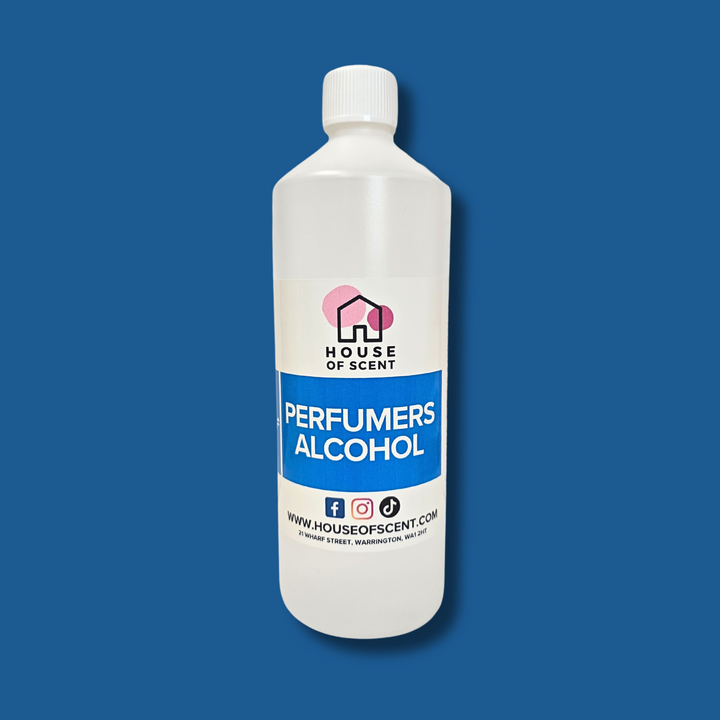
Perfumers Alcohol
£2.99
Perfumers Alcohol is the ultimate sidekick for crafting professional-quality perfumes, colognes and room sprays. Designed to blend seamlessly with your favourite fragrance oils and essential oils, this versatile base is the secret weapon to turning your dupe perfume visions into… read more
Understanding the Safety of Perfumers Alcohol
The question Is perfumers alcohol safe depends on understanding its chemical properties and how it is used. Like all ethanol-based products, perfumers alcohol is flammable, which means it can ignite if exposed to heat, sparks, or flames.
Key safety points include:
Flammability: Keep perfumers alcohol away from open flames, heat sources, and sparks.
Skin contact: While generally safe, prolonged exposure may cause dryness or irritation. Patch testing is recommended for sensitive skin.
Ingestion: Perfumers alcohol is toxic if swallowed and should never be ingested.
In regulated cosmetic or fragrance use, perfumers alcohol is considered safe when used according to guidelines. It is formulated to meet cosmetic and fragrance standards, making it suitable for skin contact in diluted concentrations.
Safe Storage Practices
Proper storage is crucial for maintaining safety and the quality of your products. To answer the question Is perfumers alcohol safe in terms of storage, follow these guidelines:
Cool, Ventilated Area – Store alcohol in a cool environment, away from direct sunlight, heaters, and hot surfaces.
Flame-Free Zone – Ensure storage areas are free from flames, sparks, or any potential ignition source.
Secure Containers – Use tightly sealed bottles to prevent evaporation and accidental spills.
Child- and Pet-Safe Storage – Keep alcohol out of reach of children and animals to prevent accidental ingestion.
Avoid Plastic Incompatibility – Although PET plastics are generally compatible, glass bottles are preferred for long-term storage to prevent leaching or degradation.
Proper storage reduces the risk of accidents and ensures the alcohol remains effective for dissolving fragrance oils.
Handling Perfumers Alcohol Safely
When working with perfumers alcohol in your fragrance formulations, correct handling is vital. Here’s how to ensure safety:
Work in a Ventilated Area – Ensure your workspace has good airflow to avoid inhaling concentrated fumes.
Use Gloves – Wearing nitrile or latex gloves can prevent skin dryness or irritation.
Keep Away from Heat Sources – Even small sparks from electrical equipment can ignite alcohol vapours.
Measure Carefully – Use accurate scales or pipettes to avoid spills and overuse.
Clean Spills Immediately – Use damp cloths and ventilate the area if any alcohol is spilled.
By following these simple precautions, you can safely work with perfumers alcohol while maintaining product quality.
Understanding CLP Labelling
Another aspect of Is perfumers alcohol safe involves understanding CLP, which stands for Classification, Labelling, and Packaging. CLP regulations are part of EU and UK chemical legislation designed to ensure the safe use of hazardous substances, including perfumers alcohol.
Key points of CLP labelling for perfumers alcohol include:
Hazard Pictograms – Typically, a flame symbol indicating flammability.
Signal Words – Such as “Danger” to highlight the risk.
Hazard Statements – Descriptions like “Highly flammable liquid and vapour.”
Precautionary Statements – Instructions for safe handling, storage, and disposal.
CLP labels are essential if you sell or distribute perfumers alcohol or finished products containing it. They communicate hazards clearly to users, ensuring safety and legal compliance.
Is Perfumers Alcohol Safe for Skin?
Many beginners worry about Is perfumers alcohol safe for direct contact. The answer depends on concentration and formulation. Perfumer’s alcohol is used widely in cosmetics and fragrances at concentrations that are safe for skin.
Considerations include:
Dilution – Fragrance oils are typically 5–20% in perfumers alcohol, which keeps the formulation safe.
Sensitive Skin – Some people may experience mild dryness or irritation; patch testing is recommended.
Evaporation – The alcohol evaporates quickly, leaving the fragrance behind and reducing prolonged exposure to the skin.
With proper formulation, perfumers alcohol is generally safe for use in sprays, perfumes, and body mists.
Safety Tips for Working with Perfumer’s Alcohol
To ensure you maintain safety, consider these practical tips:
Label All Containers – Never store alcohol in unmarked bottles. Clear labelling prevents accidental misuse.
Avoid Open Flames While Mixing – Perfume blending should always occur away from heat sources.
Ventilate Properly – Even though the alcohol evaporates quickly, good airflow prevents vapour accumulation.
Wear Appropriate Protective Gear – Gloves, aprons, and safety glasses can prevent irritation and spills.
Dispose Responsibly – Never pour large amounts down the drain; follow local chemical disposal regulations.
These simple precautions make working with perfumers alcohol both safe and effective.
Comparing Safety With Other Alcohols
A common question is how perfumers alcohol compares to alternatives, such as isopropyl alcohol. In terms of fragrance making, Is perfumers alcohol safe relative to other alcohols because:
It is formulated specifically for dissolving fragrance oils.
It has a neutral odour that doesn’t interfere with delicate scents.
Regulatory guidelines and CLP compliance make it safer for commercial use.
Isopropyl alcohol may be cheaper and readily available, but it is more drying on the skin, can affect fragrance integrity, and may not be suitable for professional perfume production.
Legal and Regulatory Considerations
When considering Is perfumers alcohol safe, it’s also important to address regulatory compliance:
IFRA Guidelines – Ensure fragrance oils are used within safe concentration limits.
CLP Labelling – Required for flammable liquids and chemicals sold commercially.
CPSR (Cosmetic Product Safety Report) – If selling alcohol-based perfumes in the EU or UK, a CPSR is recommended to confirm product safety.
Following these regulations ensures that your products are safe, legally compliant, and professionally made.
Final Thoughts
So, Is perfumers alcohol safe? The answer is yes - when handled, stored, and formulated correctly. Its professional-grade composition, compatibility with fragrance oils, and compliance with safety regulations make it the preferred choice for perfume and spray production.
By understanding flammability, skin considerations, CLP labelling, and proper storage, you can work confidently with perfumers alcohol. Whether you are creating home fragrances, body sprays, or perfumes for commercial sale, following best practices ensures both your safety and the quality of your products.
Always prioritise proper ventilation, protective gear, accurate measurements, and compliance with legal regulations. By doing so, perfumers alcohol remains a safe and versatile tool for creating beautiful fragrances. View Premium Fragrance Oils
Disclaimer
The information provided in this blog is for educational and informational purposes only. Perfumers alcohol is a flammable and potentially irritating chemical. Always follow proper storage, handling, and safety procedures. Use in a well-ventilated area and wear appropriate protective equipment. Ensure all formulations comply with IFRA limits, CLP labelling, and local regulations. Conduct testing for performance, stability, and skin safety before selling or distributing products. House of Scent is not responsible for any injuries, damages, or losses resulting from following the information provided in this blog.
FAQs
Is perfumers alcohol safe to use on the skin?
Yes, when used in proper concentrations (typically 5–20% fragrance oils), perfumers alcohol is generally safe for skin. Sensitive skin may experience dryness, so patch testing is recommended.
How should perfumers alcohol be stored to ensure safety?
Store perfumers alcohol in a cool, ventilated area, away from flames or heat sources. Use tightly sealed containers and keep out of reach of children and pets to prevent accidents.
Do I need CLP labels or a CPSR when using perfumers alcohol in my products?
Yes. CLP (Classification, Labelling, and Packaging) labelling is required for flammable chemicals like perfumers alcohol. This includes hazard pictograms, signal words, and precautionary statements to ensure safe use and legal compliance. Additionally, if you’re selling products in the EU or UK, obtaining a Cosmetic Product Safety Report (CPSR) is recommended. The CPSR confirms that your fragrance formulation is safe for consumers, taking into account ingredient concentrations, potential allergens, and overall product stability.