



Table of Contents
- What Are Allergens in Fragrance Oils? Explained
- What Are Allergens in Fragrance Oils?
- Why Do Fragrance Oils Contain Allergens?
- Common Allergens You May See
- How Do Allergens Affect People?
- Why Allergen Information Matters for Makers
- Where Can You Find Allergen Information?
- Natural vs Synthetic: Does It Make a Difference?
- Do You Need to Worry About Allergens at Home?
- Simple Tips for Safe Use
- Common Myths About Fragrance Allergens
- Building Confidence as a Maker
- Conclusion
- Disclaimer
- FAQs
What Are Allergens in Fragrance Oils? Explained
If you’ve ever explored the world of wax melts, candles, or home fragrance products, you’ve likely come across long, complicated ingredient lists filled with unfamiliar names. Among these are substances often labelled as allergens - terms that can sound alarming, especially if you are new to crafting or selling scented products and wondering What Are Allergens in Fragrance Oils.
So, what does this actually mean, and should you be concerned about them? The answer is more reassuring than you might expect. Allergens are not inherently dangerous, but they are important to understand - particularly if you are making products for yourself or others.
In this guide, we will break everything down in a clear and approachable way, helping you feel more confident about what goes into your fragrance oils and why it matters.
What Are Allergens in Fragrance Oils?
To put it simply, What Are Allergens in Fragrance Oils refers to naturally occurring or synthetic compounds within a fragrance that can cause sensitivity in some individuals.
These substances are commonly found in both essential oils and fragrance oils. They are responsible for many of the scents we love, from fresh citrus notes to calming florals. However, in certain people, they may trigger mild reactions such as skin irritation or sensitivity.
It is important to note that an allergen does not mean a product is unsafe. Instead, it highlights the possibility that some individuals may react to it.
Why Do Fragrance Oils Contain Allergens?
A common follow-up question to What Are Allergens in Fragrance Oils is why they are present at all.
The simple answer is that allergens are often an essential part of what makes a fragrance smell the way it does. Many scent profiles rely on compounds that naturally occur in plants, fruits, and flowers.
For example:
- Citrus scents often contain limonene
- Floral fragrances may include linalool or geraniol
- Herbal notes can contain compounds like eugenol
Removing these components entirely would significantly alter or weaken the fragrance. In many cases, it would make the scent less recognisable or enjoyable.
Common Allergens You May See
When learning What Are Allergens in Fragrance Oils, it helps to become familiar with some of the most common ones. These names often appear on safety documents and product labels:
- Limonene – commonly found in citrus scents
- Linalool – associated with lavender and floral fragrances
- Citral – present in lemon and lemongrass profiles
- Geraniol – found in rose-like scents
- Eugenol – linked to spicy, clove-like aromas
At first glance, these names can seem intimidating, but they are simply components of the fragrance blend.
How Do Allergens Affect People?
Understanding What Are Allergens in Fragrance Oils also involves knowing how they might affect individuals.
For most people, fragranced products are perfectly safe when used as intended. However, in some cases, allergens can cause:
- Mild skin irritation
- Allergic reactions in sensitive individuals
- Sensitivity with prolonged or direct exposure
It is worth emphasising that reactions are not universal. A fragrance that causes irritation for one person may be completely fine for another.
This variability is why proper labelling and awareness are so important.
Why Allergen Information Matters for Makers
If you are creating wax melts or candles, understanding What Are Allergens in Fragrance Oils is especially important.
For small business owners, allergen information is not just helpful - it is often required for compliance with labelling regulations. This ensures that customers are aware of what they are using and can make informed choices.
Providing clear allergen information:
- Builds trust with your customers
- Demonstrates professionalism
- Helps prevent potential issues
Even if you are only making products as a hobby, having this knowledge improves your confidence and safety practices.
Where Can You Find Allergen Information?
Another key part of understanding What Are Allergens in Fragrance Oils is knowing where to look for accurate information.
Most reputable suppliers provide detailed documentation, including:
- Safety Data Sheets (SDS)
- IFRA certificates (International Fragrance Association guidelines)
- Allergen reports
These documents list the components within a fragrance oil and indicate whether any allergens are present.
While they may seem technical at first, with a bit of practice, they become much easier to read and interpret.
You may find the regulatory documents of HoS Fragrance Oils on the right hand side of the product page:
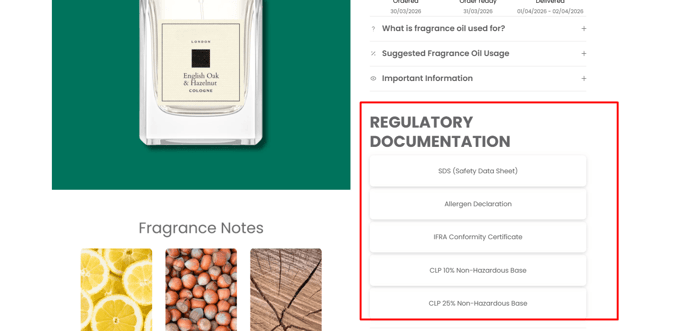
English Oak & Hazelnut Fragrance Oil
£1.99
A rich, grounding woody fragrance that begins with a bright squeeze of fresh lemon and soft green leafy notes. As it settles, a gentle nutty heart unfolds - hazelnut wrapped in delicate, translucent jasmine with subtle touches of cypress and… read more

Natural vs Synthetic: Does It Make a Difference?
When discussing What Are Allergens in Fragrance Oils, many people assume that natural products are automatically safer or free from allergens.
This is a common misconception.
In reality:
- Essential oils (natural) often contain allergens
- Synthetic fragrance oils can also contain allergens
- Both types are regulated for safety
For example, citrus essential oils naturally contain limonene, which is a known allergen. This means that even “natural” products are not necessarily allergen-free.
The key takeaway is that allergens are not about whether something is natural or synthetic - they are about chemical composition.
Do You Need to Worry About Allergens at Home?
If you are not selling your products, you might wonder how much attention to pay to What Are Allergens in Fragrance Oils.
For personal use, there is generally less risk, especially if you are using products correctly. However, it is still wise to:
- Be aware of ingredients
- Avoid direct skin contact with raw fragrance oils
- Test products in small amounts
If you are making products for friends or family, awareness becomes even more important, as others may have sensitivities you are not aware of.
Simple Tips for Safe Use
A practical understanding of What Are Allergens in Fragrance Oils can help you create and use products more safely.
Here are some simple tips:
- Always follow recommended fragrance usage rates
- Keep fragrance oils away from skin and eyes
- Store oils in a cool, secure place
- Clearly label your materials
These habits not only improve safety but also enhance the quality of your finished products.
Common Myths About Fragrance Allergens
There are several myths surrounding What Are Allergens in Fragrance Oils that can lead to unnecessary concern or confusion.
Myth 1: Allergens make products dangerous
Not true. They simply indicate a potential sensitivity for some individuals.
Myth 2: Natural products do not contain allergens
False. Many allergens occur naturally in plant-based ingredients.
Myth 3: Only low-quality fragrances contain allergens
Incorrect. Even high-quality, premium oils can contain them.
Understanding these misconceptions helps you approach fragrance oils with a balanced perspective.
Building Confidence as a Maker
Learning What Are Allergens in Fragrance Oils is part of becoming a more informed and confident creator.
Rather than viewing allergens as a problem, think of them as useful information. They allow you to:
- Make better product choices
- Improve safety awareness
- Communicate clearly with others
Whether you are a hobbyist or planning to start a business, this knowledge puts you in a stronger position.
Conclusion
So, What Are Allergens in Fragrance Oils? They are simply components within fragrances that may cause sensitivity in some individuals - but they are also a natural and essential part of many beloved scents.
Understanding them is not about fear; it's about awareness. With the right knowledge, you can enjoy creating and using fragranced products while maintaining safety and confidence.
By taking the time to learn What Are Allergens in Fragrance Oils, you are not only improving your craft but also ensuring that your products - whether for personal use or others - are handled responsibly and thoughtfully.
In the end, a well-informed maker is a better maker, and that knowledge will always set you apart.
View Premium & Compliant Fragrance Oils
Disclaimer
This blog is for general informational purposes only and does not constitute medical, legal, or professional advice. While it provides guidance on allergens in fragrance oils, individual sensitivities and regulations may vary. Always refer to official documentation and consult a qualified professional where necessary. Any actions taken based on this content are at your own risk.
FAQs
What Are Allergens in Fragrance Oils?
Allergens in fragrance oils are natural or synthetic compounds that may cause sensitivity in some individuals. They contribute to scent profiles but are not inherently dangerous.
Do natural fragrance oils have allergens?
Yes. Even essential oils and natural ingredients can contain allergens, such as limonene or linalool, which may trigger mild reactions in sensitive people.