


Table of Contents
- How to Properly Calibrate Your Scale and How Often
- Why Scale Calibration Matters
- Types of Scales in Home Fragrance Making
- How to Properly Calibrate Your Scale and How Often: Step-by-Step
- How Often Should You Calibrate Your Scale?
- Common Mistakes to Avoid
- Tips for Maintaining Accurate Scales
- When to Consider Upgrading Your Scale
- Summary
- FAQs
How to Properly Calibrate Your Scale and How Often
Accurate measurement is fundamental to success in home fragrance making, from candles to wax melts and diffusers. Even a slight miscalculation in your ingredients can affect fragrance load, burn quality, scent throw, or overall product consistency. This is why understanding how to properly calibrate your scale and how often is essential for both hobbyists and small-scale makers.
Whether you’re using a kitchen scale, a trade scale, or a more professional setup, proper calibration ensures your measurements are precise, repeatable, and reliable. In this guide, we’ll explore the importance of calibration, the step-by-step process, and the recommended frequency for keeping your scale in top form.
Why Scale Calibration Matters
Many makers underestimate the impact of scale accuracy. Even high-quality scales can drift over time, leading to small but significant measurement errors. This is particularly important when working with wax and fragrance oils, where percentages matter.
For example, in a 500g soy wax batch with a 10% fragrance load, a 2g error can mean adding too much or too little oil. This affects not only the scent throw but also how the wax binds, how it burns, and even the safety of the finished product. Understanding how to properly calibrate your scale and how often prevents these common pitfalls.
Types of Scales in Home Fragrance Making
Before diving into calibration, it’s worth noting that not all scales are created equal. Common options include:
- Kitchen Scales – Typically designed for general cooking and baking. They are less precise and often cannot be recalibrated manually.
- Trade Scales – Designed for commercial or professional use, trade scales offer higher accuracy, better repeatability, and often allow manual calibration.
- Precision or Laboratory Scales – Extremely accurate scales used for very small measurements, often down to 0.01g, suitable for highly detailed formulations.
The type of scale you use affects both the calibration process and frequency. For example, trade and precision scales are recalibratable and should be regularly checked, while kitchen scales may only offer approximate readings.
How to Properly Calibrate Your Scale and How Often: Step-by-Step
The process of calibration may vary slightly depending on your scale’s make and model, but the general principles remain the same. Here’s a detailed guide to ensure accuracy:
1. Prepare Your Calibration Tools
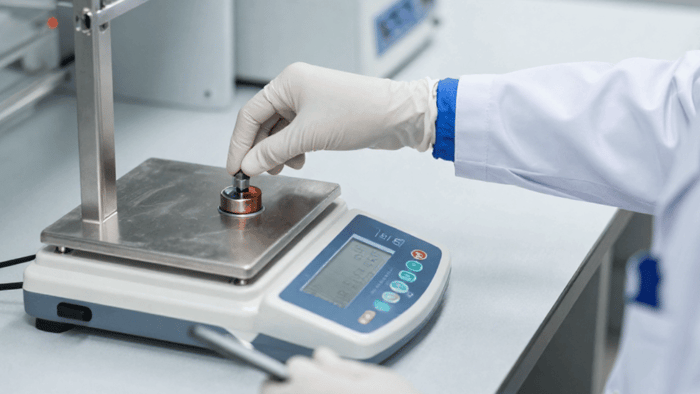
- Calibration Weights: Use certified weights that match your scale’s recommended calibration range. For smaller scales, these often include 50g, 100g, or 200g weights.
- Stable Surface: Place your scale on a flat, vibration-free surface to prevent inaccurate readings.
- Environmental Control: Avoid draughts, direct sunlight, and fluctuating temperatures, all of which can impact results.
2. Warm Up Your Scale
Switch on your scale and let it warm up for several minutes. Many electronic scales need this period to stabilise their internal components and give a consistent reading. Skipping this step can result in errors.
3. Enter Calibration Mode
Most scales have a dedicated calibration function, often activated by pressing a combination of buttons. Check your user manual for the exact instructions. When the scale is ready, it will usually display a “0” or a prompt to place the calibration weight.
4. Apply the Calibration Weight
Carefully place the weight in the centre of the scale’s platform. Ensure it doesn’t touch anything else and that it is placed steadily. The scale will detect the weight and adjust its internal measurement system accordingly.
5. Confirm and Complete Calibration
Once the scale registers the weight correctly, it will typically display a confirmation message or return to zero. Remove the weight and test the scale with known objects or additional calibration weights to ensure accuracy.
6. Regular Testing
Even after calibration, it’s important to test your scale periodically. Place a known weight on the scale and check that the reading matches. If you notice drift, repeat the calibration process.
How Often Should You Calibrate Your Scale?
Knowing how to properly calibrate your scale and how often is just as important as the process itself. Frequency depends on usage and scale type:
- Light Use (Hobbyist): Calibrate once a month or before critical batches.
- Regular Use (Small Business): Calibrate weekly or before production sessions.
- High-Precision or Professional Use: Calibrate daily or before every batch to ensure maximum consistency.
Remember, environmental changes, frequent movement, or heavy usage can increase the need for more frequent calibration. Scales can drift gradually without obvious signs, so adhering to a schedule is the best way to maintain accuracy.
Common Mistakes to Avoid
Even experienced makers sometimes fail to calibrate correctly. Here are some pitfalls to avoid:
- Skipping Calibration: Relying on a scale without recalibrating can lead to batch inconsistencies.
- Using Improper Weights: Kitchen items like coins are not precise enough; always use certified calibration weights.
- Ignoring Environmental Factors: Vibrations, drafts, or uneven surfaces can affect readings during calibration.
- Calibrating Too Quickly: Allow the scale to stabilise and the weight to settle fully before confirming.
By avoiding these mistakes, you can maintain consistent, accurate measurements across all your home fragrance projects.
Tips for Maintaining Accurate Scales
Calibration is only part of the equation. Proper care extends the life and accuracy of your scale:
- Keep it Clean: Dust, wax drips, or fragrance oils can interfere with readings. Wipe the platform after every use.
- Store Safely: Avoid dropping or knocking your scale. Physical shocks can damage the load cell.
- Use Correct Capacity: Never exceed the recommended maximum weight of your scale. Overloading can damage the mechanism and affect calibration.
- Check Regularly: Even if your scale seems accurate, periodic checks with calibration weights can catch drift early.
When to Consider Upgrading Your Scale
Even with regular calibration, some scales may not meet your accuracy needs. Signs it might be time to upgrade include:
- Frequent discrepancies even after calibration
- Inability to read small increments necessary for fragrance precision
- Inconsistent readings in repeated tests
- Lack of a calibration function
For makers scaling production or seeking highly consistent results, investing in a trade or precision scale can be transformative.
Summary
Understanding how to properly calibrate your scale and how often is fundamental for anyone serious about home fragrance making. Proper calibration ensures accurate fragrance loads, consistent burn performance, and reliable product quality.
Key takeaways:
- Always use certified calibration weights and follow manufacturer instructions.
- Let scales warm up and stabilise before calibration.
- Test your scale regularly to catch drift early.
- Adjust calibration frequency based on usage: hobbyist, small business, or professional production.
- Maintain your scale by keeping it clean, storing it carefully, and avoiding overloading.
A well-calibrated scale is more than just a tool — it’s the foundation of consistent, high-quality home fragrance products. By mastering calibration, you ensure that every batch you create meets your standards, delights your customers, and reflects the care and precision that goes into your craft.
Disclaimer
The information in this blog, How to Properly Calibrate Your Scale and How Often, is for educational purposes only. Results may vary depending on scale type, usage, and environment. Readers should follow manufacturer instructions, carry out their own testing, and use scales at their own risk. Proper compliance with safety standards is the responsibility of the user.
FAQs
How do I properly calibrate my scale?
To properly calibrate your scale, use certified calibration weights, place your scale on a stable surface, enter calibration mode, apply the weight, and follow the scale’s instructions to confirm.
How often should I calibrate my scale?
Calibration frequency depends on usage: hobbyists should calibrate monthly, small businesses weekly, and professionals daily or before every batch for optimal accuracy.
Why is scale calibration important in home fragrance making?
Accurate calibration ensures precise measurements of wax and fragrance oils, leading to consistent scent throw, safe burn quality, and reliable product performance.