

Table of Contents
- When to Recalculate CLPs for Fragrance Products
- What Is a CLP and Why Is It So Important?
- Using Pre-Calculated CLPs: When They Are Valid
- What Counts as a “Non-Hazardous Base”?
- When You Must Recalculate Your CLP
- Hazardous Bases Explained: Why They Matter So Much
- Common Mistakes to Avoid
- Why Accurate CLPs Protect Your Business
- A Simple Rule to Remember
- Final Thoughts
- FAQs
When to Recalculate CLPs for Fragrance Products
If you’re creating and selling fragranced products, understanding when to recalculate CLPs for fragrance products is one of the most important steps in staying compliant and protecting both your customers and your business.
It’s easy to assume that once you have a CLP document, you can use it across multiple products — but that’s not always the case. Small changes in formulation can significantly affect the final classification, which is why knowing exactly when to recalculate CLPs for fragrance products is essential.
In this guide, we’ll break everything down in a clear, practical way so you can feel confident about when your CLP is valid — and when it’s time for a new one.
What Is a CLP and Why Is It So Important?
CLP stands for Classification, Labelling and Packaging. It’s a regulation that ensures products containing hazardous substances are clearly labelled with the correct safety information.
For fragrance makers, this includes products such as:
- Candles
- Wax melts
- Reed diffusers
- Room sprays
A CLP document determines:
- Hazard pictograms
- Signal words (e.g. Warning or Danger)
- Hazard and precautionary statements
- Allergen declarations
Understanding when to recalculate CLPs for fragrance products helps ensure that all of this information remains accurate. Using an incorrect CLP can result in mislabelling, which can lead to serious consequences including fines, product recalls, or safety risks.
Using Pre-Calculated CLPs: When They Are Valid
House of Scent provide pre-calculated CLPs to make things easier — based on standard usage levels such as 10% or 25% in non-hazardous bases only.
For example, if a CLP is calculated at 10% fragrance load in a non-hazardous base, it can usually be used without modification — but only under very specific conditions.
You can safely use our pre-calculated CLP when:
- The fragrance percentage matches exactly (e.g. 10% or 25%)
- The base used is non-hazardous
- The formulation has not been altered in any way
This is particularly relevant for wax-based products like candles and wax melts, where the base is generally considered non-hazardous.
In these cases, you do not need to worry about when to recalculate CLPs for fragrance products, as long as everything aligns perfectly with the original calculation.
What Counts as a “Non-Hazardous Base”?
A non-hazardous base is one that does not contribute additional hazard classifications to the finished product.
Common examples include:
- Soy wax
- Paraffin wax
- Coconut wax blends
Because these materials typically do not introduce new hazards, they allow the CLP to be based primarily on the fragrance oil itself.
This is why pre-calculated CLPs are often suitable for wax melts and candles — and why, in these scenarios, concerns about when to recalculate CLPs for fragrance products are less frequent.
When You Must Recalculate Your CLP
Now let’s look at the situations where a new CLP is absolutely required.
Understanding when to recalculate CLPs for fragrance products becomes critical the moment you step outside the original formulation.
1. When Using a Hazardous Base
If your base carries its own hazard classification, your existing CLP is no longer valid.
This includes:
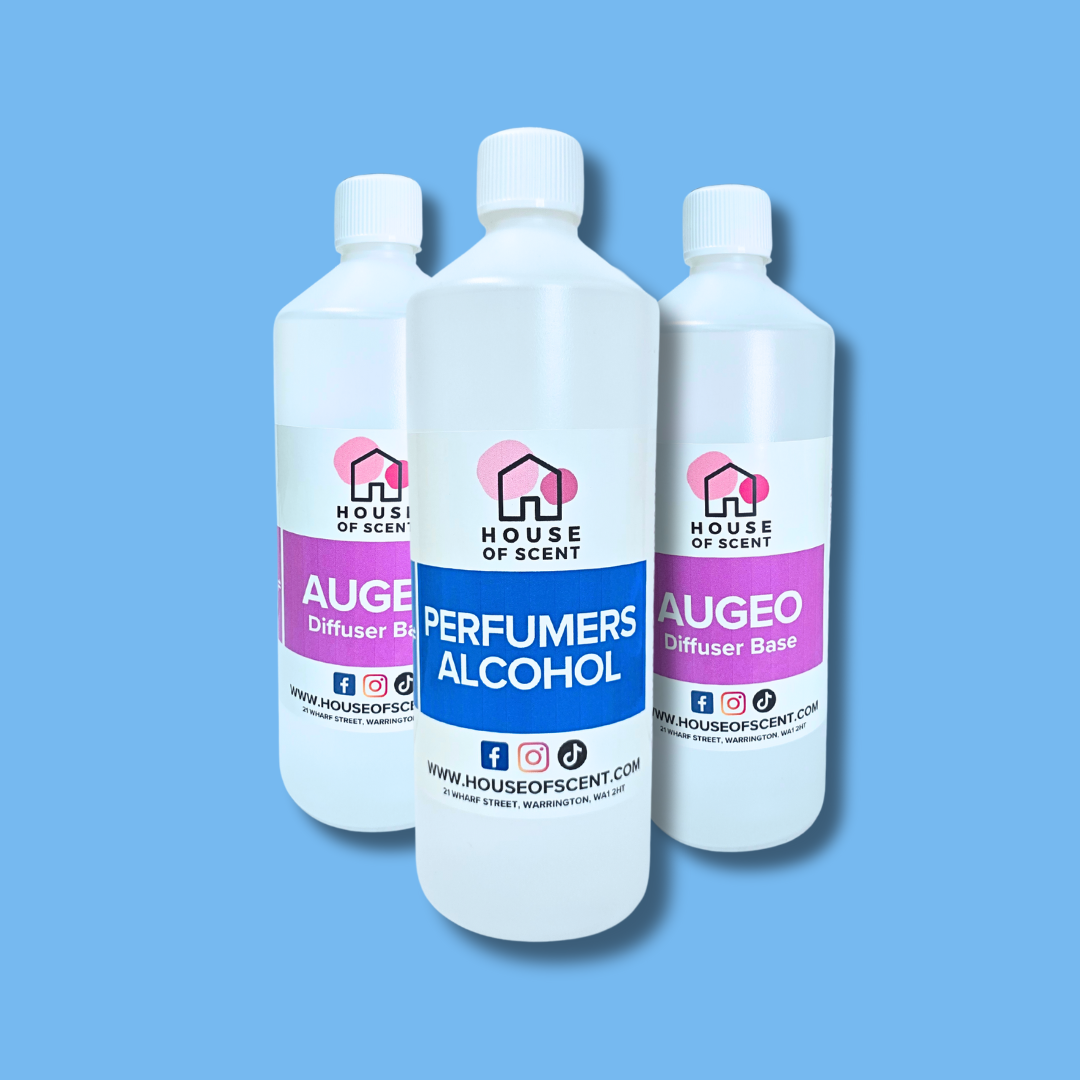
- Perfumers alcohol
- Augeo Clean Multi
- Other flammable or classified solvents
These substances introduce additional hazards such as flammability, which significantly changes the final classification of your product.
Even if your fragrance percentage remains the same, switching from a non-hazardous base to a hazardous one means you must reconsider when to recalculate CLPs for fragrance products — and in this case, the answer is immediately.
2. When Changing Fragrance Percentage
Your CLP is calculated based on a specific fragrance load. Minor changes within the validated range (for example, using a 25% CLP for any formulation between 15–25% fragrance in a non-hazardous base) usually do not require a recalculation.
A new CLP is needed if you:
- Exceed the upper limit of the validated range
- Drop below the lower limit of the validated range
Even small adjustments outside the validated range can affect the product’s hazard classification. Double-checking your CLP range ensures your labelling stays accurate, compliant, and safe.
3. When Changing the Product Type
Even if you’re using the same fragrance oil, the type of product you’re making can sometimes affect the CLP — but not always.
For example, a 10% CLP calculated in a non-hazardous base can usually be used across multiple product types, including:
- Candles
- Wax melts
- Room sprays
As long as you stay within the validated fragrance percentage and continue to use a non-hazardous base, the original CLP is generally valid.
However, if you change the base to a hazardous one (like Perfumers alcohol or Augeo) or adjust the fragrance load beyond the validated range, the product’s hazard profile can change. In these cases, a new CLP calculation is required to ensure your labelling is accurate and compliant.
The takeaway? Switching product types doesn’t automatically mean you need a new CLP — it’s the base and percentage that matter most.
4. When Combining Multiple Fragrance Oils
Blending fragrances is a creative and popular practice, but it also changes the chemical composition of your product.
Each fragrance oil contains its own allergens and hazard classifications. When combined, these must be recalculated as a whole.
So if you’re blending scents, it’s another clear example of when to recalculate CLPs for fragrance products.
5. When Supplier Data Changes
Occasionally, fragrance suppliers update their formulations or safety data sheets (SDS).
If this happens, your original CLP may no longer be accurate. Even if you haven’t changed anything on your end, updated supplier data can trigger the need to review when to recalculate CLPs for fragrance products.
💡 Tip: Make it a habit to regularly check your fragrance oils’ SDS and supplier data. Even small updates can affect hazard classifications, so staying informed helps keep your products compliant and safe.
Hazardous Bases Explained: Why They Matter So Much
Hazardous bases like perfumers alcohol and Augeo are widely used in products such as:
- Room sprays
- Linen sprays
- Reed diffusers
These bases often carry flammable classifications and other hazards that must be clearly labelled.
When combined with fragrance oils, the final product may require:
- Flame pictograms
- Additional warning statements
- Different signal words
This is why understanding when to recalculate CLPs for fragrance products is especially important when working with these bases.
Common Mistakes to Avoid
Even experienced makers can sometimes overlook key details. Here are a few common mistakes:
- Assuming a CLP covers all product types
- Using a 10% CLP for a 12% formulation
- Not updating CLPs after switching bases
- Ignoring updated SDS information
Avoiding these mistakes starts with knowing exactly when to recalculate CLPs for fragrance products and taking action when needed.
Why Accurate CLPs Protect Your Business
CLPs are not just a regulatory requirement — they are a critical part of responsible product making.
Accurate labelling helps to:
- Keep customers safe
- Build trust in your brand
- Prevent legal complications
- Ensure smooth selling on platforms and markets
If your CLP is incorrect, it could lead to serious consequences. That’s why understanding when to recalculate CLPs for fragrance products isn’t just helpful — it’s essential.
A Simple Rule to Remember
If anything changes in your formulation, assume you need a new CLP.
This includes:
- Base
- Percentage
- Ingredients
- Product type
Keeping this rule in mind makes it much easier to determine when to recalculate CLPs for fragrance products without second-guessing yourself.
Final Thoughts
Navigating CLP requirements might seem overwhelming at first, but once you understand the key triggers, it becomes much more manageable.
If you’re working with:
- A non-hazardous base
- A standard 10% or 25% fragrance load
- An unchanged formulation
Then your CLP is likely valid.
However, the moment you introduce a hazardous base like perfumers alcohol or Augeo, or make any changes to your formulation, it’s time to revisit when to recalculate CLPs for fragrance products and take the appropriate steps.
By staying informed and proactive, you can continue creating beautiful fragranced products while remaining fully compliant and confident in your labelling 💕
Check if your CLP is still valid — browse our compliant fragrance oils
Disclaimer
This blog is for general guidance only and does not constitute legal advice. Always refer to official CLP regulations and consult a qualified professional if you are unsure about your product classification or labelling requirements.
FAQs
When do I need to recalculate a CLP for my fragrance product?
You must recalculate a CLP whenever there are changes to your product that could affect its hazard classification. This includes using a hazardous base, adjusting the fragrance percentage beyond the validated range, switching product types with a hazardous base, or combining multiple fragrance oils. Updates from your fragrance supplier’s SDS can also trigger a recalculation.
Can I use a pre-calculated CLP for different products?
Yes, pre-calculated CLPs provided by House of Scent (e.g., 10% or 25% fragrance in a non-hazardous base) can be used across multiple product types like candles, wax melts, or room sprays — but only if the fragrance percentage remains the same, the base is non-hazardous, and the formulation hasn’t changed. Any deviation may require a new CLP.